

Tessa Yang’s debut collection of fiction, The Runaway Restaurant, was released last fall by 7.13 Books. Jen Michalski’s third collection of fiction, The Company of Strangers, was released this January by Braddock Avenue Books. In many ways, that is where the differences end. Both Yang and Michalski write from places of deep isolation and searching: for connection, for meaning, for others. Both write short and long fiction, realist and speculative. Both sat down to talk about their collections, their preferred points of view and themes, and their experiences in publishing with indie presses.
JM: Congratulations on your debut collection The Runaway Restaurant! I loved it. I was so surprised (and pleased) to see so many full-length stories included here! For some reason, most of your work I'd read online was flash, and I got it into my head that you worked more in that form than not. Do you have a preferred form, or does it depend on the story?
TY: 5 – 6,000 words seems to be my sweet spot for stories. But I discovered flash during a class in grad school and fell in love with how a highly compressed form allows you to conduct weird, fun experiments that are harder to get away with in a traditional-length story. (The class had both fiction writers and poets; the fiction writers all thought we were writing micros, and the poets thought we were writing prose poems, so right away you had this fuzziness that was productive in that it was very freeing. We were all like: What’s going on? What is this thing we’re writing?) I think the two flash pieces in The Runaway Restaurant are indicative of how I still like to use flash as a testing ground for craft elements I’m less comfortable with. “Princess Shipwreck” is a sort of reverse fairy tale written in first-person plural. “Preservation” uses a direct address and has an eight-year time jump at the end.
JM: A lot of your stories have similar background elements, ie, mothers who've died, siblings or children who've gone missing, children and young adults living on their own, without supervision. I see a lot of similar background in my own work, and in the vein that we explore our psyches through our fiction, what do you make of these recurring details?
TY: In the event my mother is reading this, I’ll put out a large disclaimer that I had a very happy childhood and was never abandoned to fend for myself and never ran away! I’m being a little flippant, but I know people sometimes read fiction and assume autobiography where it’s just authors making up stories they find thought-provoking or entertaining. You’re right, though: Patterns emerge whether we’re writing from lived experience or not. For me, I’m interested in narratives where characters have to reorganize their lives around a familial absence—whether that’s caused by a death, or a runaway daughter, or a caregiver who flees because he’s pissed off some dangerous people. I think I return to this subject because, like a lot of people, I’ve shaped much of my identity around the degree to which I’m like or not like my family. They’re the starting point for how I understand who I am. My characters begin in the same place, and then, (because I’m mean!), I strip away those mainstays and see what happens next.
One pattern I noticed in The Company of Strangers is the use of second person—a tricky, relatively uncommon point of view that stirs up strong opinions both for and against it. What's the appeal of this POV for you? Have you ever revised a first- or third person story into second person, or does that "you" voice always emerge naturally in the first draft?
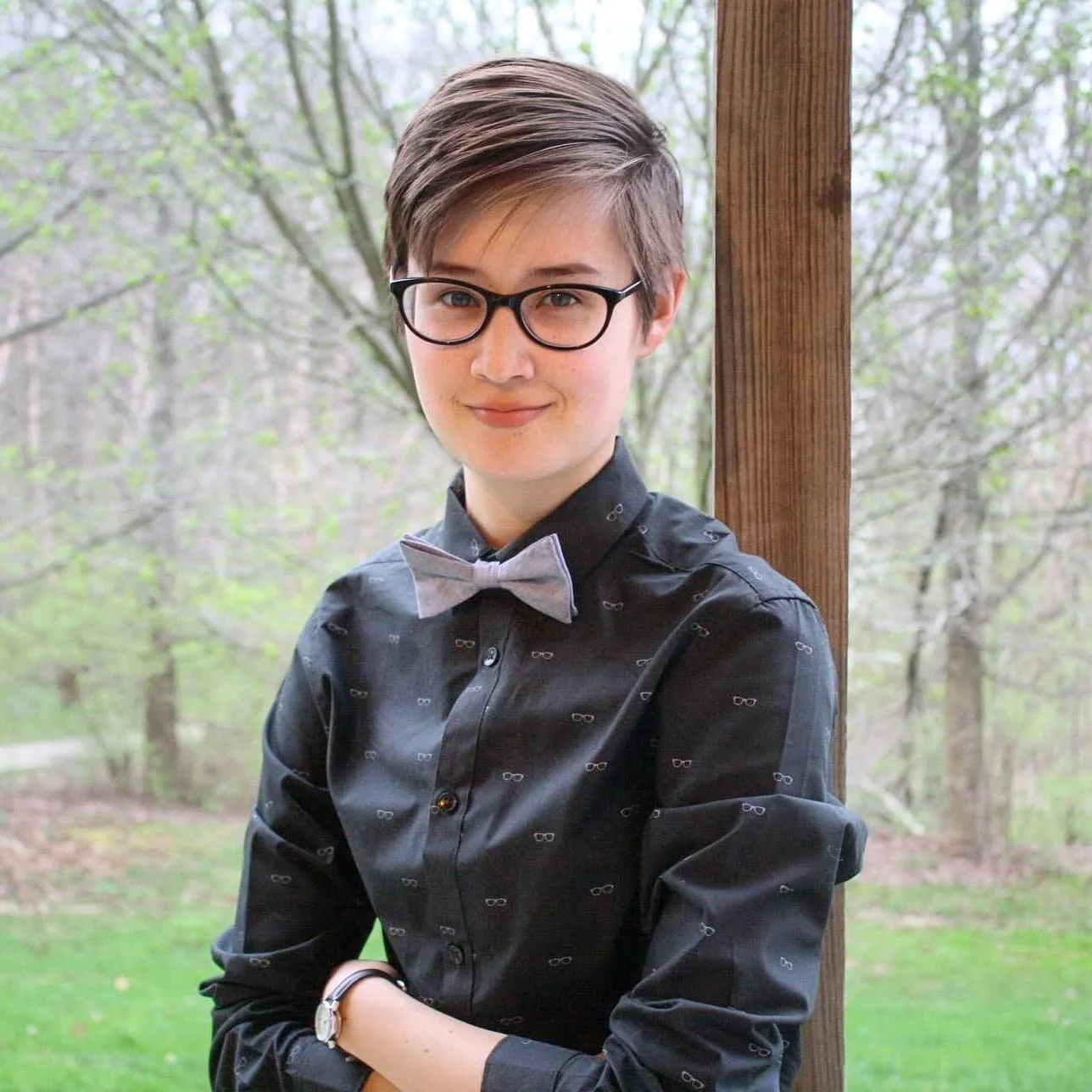
Tessa Yang
JM: Yes, I know I have created a grave sin here. I’m actually in the middle of writing a craft essay about why the heck I gravitate to this point of view. I think, in short, that I feel a little freer writing it—it’s less formal, more conversational. It’s more immediate than third, but no so immediate in that you are stuck in another person’s point of view like you are in first. I think it’s the appeal of, “you, dear reader, have been in this situation, haven’t you?” It’s a point of view that can feel very playful, ie, “a fucked-up situation it was!” or more interrogative, accusatory, like the first story in my collection, “After Life.” I remember as a teenager reading Jay McInerney’s Bright Lights, Big City, which is kind of still the seminal (maybe singular) novel of successful second person, and being surprised and excited that a story could be told that way. I think, maybe, subconsciously, those events become formative in how one approaches work, too. Reading Kurt Vonnegut (also as a teenager) had a similar affect on me.
TY: Speaking of Vonnegut, as someone whose writing leans more speculative, I loved the surreal strangeness of your story "The Meteor," in which a woman falls in love with a meteor that lands in her yard. How did this piece come about, and what made you want to include it in the collection?
JM: It was a metaphor for love, or maybe more infatuation, how it overwhelms the logical part of oneself (particularly when one is already in a stable, healthy relationship!). You become obsessed with it to the point it can destroy the good parts of your life. But everyone is susceptible to it—no partner is immune to being struck by the meteor. I think it also calls into question how well we can really know each other—does my partner of 20 or 30 years really love me? Did they experience an unrequited love from a coworker in year 15? In some ways, we are always in the company of strangers, I think.
I love your speculative, surrealist leaning as well! Your story "Biohack" made me think of a Brian Evenson story in which there's a secret club of people who amputate their body parts. What authors do you think have influenced your work the most, either directly or indirectly?
TY: I don’t know that Evenson story—thanks for the rec! Unsurprisingly, I take a lot of inspiration from other authors who write in the literary-speculative space: Carmen Maria Machado, Kelly Link, George Saunders, and Helen Oyeyemi have all been permission-givers at one point or another. A less obvious influence might be Lorrie Moore. I read her work in college, when I was just starting to write short fiction, and was captivated by that distinctively deadpan Lorrie Moore voice that makes her work so identifiable, even a single paragraph in. Plus, she makes me laugh! Reading her fiction taught me that sad stories benefit from moments of levity.
JM: I was reading an interview about arranging collections and someone mentioned poet Christopher Salerno’s view of the role of each poem in a manuscript: “Some poems are natural openers, some are builders, some are bridges, some are closers, some are palette cleansers.” I probably don’t give as much thought to arranging collections as I should. Other than a strong voice for the opener and a strong parting image for the final story, I don’t think as much about the pages in-between, aside from “longer story, then shorter story,” or “fantastical story, then realist story.” Do you have a philosophy about arranging collections? Are there any collections in which you felt the arrangement was exquisite?
TY: Oh god, I spent way too much time thinking about this. In fact someone asked me about the process for arranging The Runaway Restaurant at my book launch, and I had to look at the table of contents to see what order the stories were in, because it changed so many times, I didn’t even remember. In addition to everything you mentioned, some considerations for me were trying not to stack the saddest stories, separating the flash by four or five longer pieces, ending on a semi- uplifting note, and alternating POVs. (I’m sure not every reader struggles with this, but for me, I sometimes start to conflate narrators when there are several first-person stories in a row). Naturally I got very tangled up trying to balance all those concerns. My editor helped me sort out which to prioritize, and I’m satisfied with the arrangement we ended up with.
As for a collection with exquisite arrangement, the first one that comes to mind is Danielle Evans’ The Office of Historical Corrections. Each of the shorter pieces efficiently explores the central theme of the past weighing on the present from a slightly different angle, and then it all comes to a head in that incredible novella, which is a kind of historical mystery.
Let’s wrap up with a question about your publishing process: You've worked with a few different indie presses (Braddock Avenue, NineStar, Black Lawrence, Dzanc) on your various books. Any words of advice for fiction authors looking into the small or indie press route?
JM: Oh sure! I know I had a lot of expectations when I signed with my first independent press, and some of them didn’t match reality, so I was disappointed at the time. However, knowing what I know now has made it so much easier to understand what is in your hands and what isn’t, and it helps to manage expectations and what being “successful” is. First, any book for which you are offered a contract by any publisher, big 5 or independent, is successful. Publishers read thousands of manuscripts a year, and for them to choose your book above all those really speaks to the level at which you’re writing. Second, even the most successful indies are not big operations, and your experience with editing, copyediting, marketing, even response to your emails will vary from indie to indie. Unfortunately, you usually don’t know this until after you sign the contract, which is why it’s important to reach out to other authors on the same press to find out about their experiences before you sign. Because sometimes the right move is not to sign—which is very hard, because there’s this fear that no other publisher will see the book the same way and you’ve passed on your only opportunity—but sometimes it’s better to put a book away for a bit than to have a book published that has five reviews on Goodreads and that no one can buy because of distribution issues. Which is one of the most important lessons I’ve learned—book distributers are not equal. Know before you sign a contract how your book will be distributed. Will it be distributed by Ingram or PGW, which means that most bookstores will be able to order it, or someone else? Some bookstores, Barnes & Noble and most libraries, don’t carry books from independent distributors, which means your books will only be accepted through consignment, if at all. You can have all the publicity in the world, great blurbs, an interview with a major media outlet, but if no one can find your book anywhere, it’s sort of difficult to make sales. Anyway, all this is to say is that learning how the publishing process works can help you be realistic and also tailor where you will market your book for the greatest success.
So what are you working on now?
TY: My current project is a literary sci-fi novel starring a marine biologist and a misunderstood sea monster. It's kind of a tribute to Jaws, but without all the shark hate! I'm both fascinated by the ocean and very afraid of water, and that interplay has turned out to be good fuel creatively. Separately, I'm piecing together a second collection, with stories also somewhere on the lit/sci-fi spectrum. I seem to be incapable of working on just one thing at a time. I guess that's OK? It certainly seems to be common among writers, juggling a few projects at once. But what about you? Do you home in on one manuscript at a time, or are you a multi-tasker?
JM: I’m a multitasker, too! Although I’ve spent most of the last two years working on a novel called All This Can Be True. I had this image in my head of a woman waking up to a phone call from the hospital telling her that her husband just woke up from a coma. After she hangs up, she turns to the person next to her in bed—another woman—in a panic. What happens if you’ve given up someone for dead, started on a new life, and then your old life comes calling for you? What do you owe that old life?
Buy the Books!
The Runaway Restaurant by Tessa Yang
The Company of Strangers by Jen Michalski
Tessa Yang is the author of the story collection The Runaway Restaurant (7.13 Books 2022). Her short fiction has appeared or is forthcoming in The Magazine of Fantasy and Science Fiction, CRAFT, The Cincinnati Review, and elsewhere. She lives in upstate New York where she is an assistant professor of English at Hartwick College. Find her online at www.tessayang.com, or on Twitter: @ThePtessadactyl.
Jen Michalski is the author of three novels, three short story collections, and a couplet of novellas. Her latest novel, You'll Be Fine, was a 2021 Buzzfeed "Best Small Press Book," a 2022 Next Generation Indie Book Awards Finalist, and was selected as one of the "Best Books We Read This Year" by the Independent Press Review. Her writing has appeared in The Washington Post, Poets & Writers, The Literary Hub, Psychology Today, Writer's Digest, and more. She’s the editor of the online literary weekly jmww and currently lives in Southern California. @MichalskiJen